What a Cheating Site Hack Teaches Every Company About Cybersecurity - The Ashley Madison Case
Some companies sell software. Some sell food. Ashley Madison sold secrecy above all else. And then casually destroyed their brand due to carelessness.

Imagine going to work one day and finding the office in full chaos. Everyone is panicking, and you're told not to touch your computer. Imagine your entire production database appearing online tomorrow. Not just passwords, but customer records, private messages, internal emails, and business secrets. Would your company survive? Well, Ashley Madison built its business on the assumption that "it will never happen to us."
Only it did. With disastrous consequences.
It's not really a new story. The breach itself happened in 2015, and a Netflix documentary about it was released in 2024. But apparently, that case seems more relevant than ever in a world where technology is so ingrained in our everyday lives. Cybersecurity has never been "sexy" as a topic. But can a hacked site whose marketing slogan was "Life is short. Have an affair." change that? Maybe, maybe not. But I'll write about it anyway as an example of what TO DO and what NOT TO DO when building an internet-facing company.
The Ashley Madison Case
If you haven't heard of Ashley Madison, here's a quick review. It's a dating site for married people who want to find affair partners. It was founded in 2001 in Canada and later spread its business to many other countries worldwide. The name comes from two of the most popular women's names in North America. Ashley Madison had 37 million users worldwide at the time it was hacked. A hacking group that called itself "The Impact Team" leaked personal and financial data of over 30 million accounts onto the dark web. The data included: names, home addresses, phone numbers, email addresses (including military and government domains), passwords, account activity, secret sexual fantasies, preferences, and credit card transaction histories. That was about users. A second set of released data added internal emails, the full email history of the company's CEO, and internal documents with business secrets. The 2015 data breach ultimately cost Ashley Madison's parent company nearly $30 million in direct legal settlements, regulatory fines, and mandatory security upgrades. Plus a massive 25% drop in total revenue. The hackers were never identified. So what can we learn from this company and the breach? Even if you only have one customer, you're still responsible for their data and privacy.
Lesson 1 - Leadership mindset
Don't treat security as an afterthought.
Ashley Madison was not hugely popular from the very beginning. They spent years searching for marketing strategies that actually work and that would bring in more users. The main objective was business growth. Just like most other businesses in the world. They didn't completely ignore security topics, but those were always pushed to the background by the company's leaders, who focused on... more growth. One of the former employees describes it as they just hoped they wouldn't get hacked. It's a surprisingly naive hope, considering the site's questionable morality. You will make a lot of people angry with a business like that, and not all hacks are about money. Even if it is about money, then even small family businesses have been targeted, so no one is really safe. Please drop the notion that your business is too small, too specific, or too uninteresting for hackers. If you're connected to the Internet, you can be a target like anyone else.
If you're starting an online business today, at a minimum, establish these foundations from the start:
• Make an individual responsible for security
If it remains vague, everyone's business, then in reality, it's nobody's business. Choose at least one person whose main focus is security, or even a team if you have more resources. That person should be willing to ask the uncomfortable questions that are not always aligned with enterprise objectives.
• Decide what kind of data you really need to store
You probably don't need to know and store every little detail about your customers. For each piece of data you collect, you also need to protect it. It can get expensive pretty quickly when the business is undergoing significant growth. Meanwhile, you can't leak what doesn't exist.
• Include security in every major technical decision
Launching a new feature shouldn't only involve discussions about usability, performance, and business value. Security should have a seat at the table from day one, not be squeezed in before or even after release.
• Allocate time and budget for security work
Security improvements rarely generate new customers, so they're easy to postpone. Make them part of the roadmap instead of something developers "will get to later." Let me tell you - they won't. There's always a lot on the table for developers, so if you don't prioritize security early on, it will become an afterthought, whether you consciously choose it or not.
• Accept that a breach is possible
Hope is not a security strategy. Build your systems with the assumption that someone will eventually try to break in.
Lesson 2 - Business integrity
Don't make false claims about security, privacy, and features.
If you ignore this lesson, it'll cost you a lot later. Ashley Madison is an interesting example here. They did understand that they're basically selling trust and discretion. They promised a discreet way to meet affair partners while keeping your marriage intact. No one was supposed to find out. What did the company do? They added some nice-looking security badges to their front page.
Here's what the page looked like at the time:
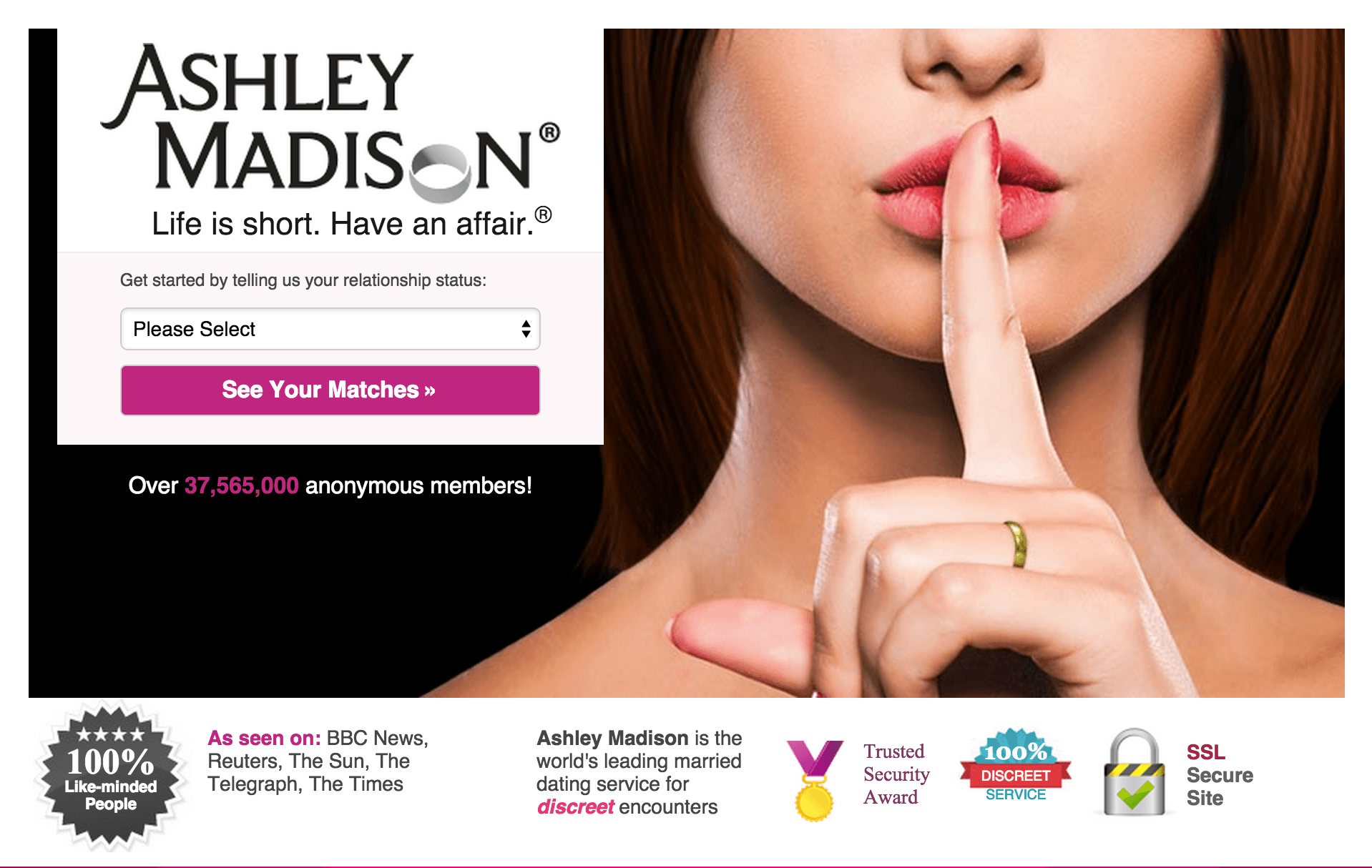
Turns out, the security badges were all fake. Literally. Not even a hint of anything real. Unfortunately, that was not the only problem. They also sold fake services. Users could buy a permanent account and data deletion for $20. Like you were never on that site. Only... that wasn't real either. The data was never actually deleted. The leaked internal emails revealed that the leadership did consider actually implementing the deletion service they were offering and earning millions from. That's lovely.
I wish I could say there weren't any more fabrications. But... there were also over 10 000 fake accounts with women's profiles. All those accounts were managed by either the employees or just automated bots. They were meant to lure in more male customers who had to buy credits to talk to the women on the site. The service was free for women. The fake profiles were generated to appeal to an average male fantasy. The bots were instructed to start conversations. Meanwhile, the marketing strategy claimed a 60-40 split between male and female users. A breach can reveal not only your data but also your company's integrity, or the lack of it. Good luck rebuilding your reputation afterward. Disaster prevention is the key, as always:
• Only promise what you can actually deliver
If you advertise "complete privacy", "permanent deletion," or "100% secure", make sure those claims are technically and legally true. Remember, it cost the company millions in legal fees because, of course, many users sued them after the breach.
• Revise security and privacy claims regularly
Marketing pages, sales material, and the product should tell the same story. Don't allow outdated information or exaggerated promises to stay online.
• Build the feature before selling it
Never advertise or charge customers for functionality that doesn't actually exist or hasn't been properly tested.
• Treat users' trust as part of your product
Well-implemented security also means keeping the promises your customers paid for, not only preventing hackers and data leaks.
• Be transparent about limitations
No online service is completely anonymous or impossible to hack. Honest communication builds more trust than unrealistic guarantees.
Lesson 3 - Technical execution
Have an actionable plan.
Ashley Madison was not completely without any security measures. It just wasn't the priority. They did use data encryption, VPN, and access limitations. Only not in a way that was difficult to hack. Apparently, the VPN connection was password-protected with a shared secret, but the secret could be found on Google Drive. Or the decryption keys and passwords could be found in plain text. The hack was supposedly carried out by logging into the network using a former contractor's VPN credentials. From there, they could apparently access all the internal data and download full databases without anyone noticing.
• Build secure technical foundations from day one
Use multi-factor authentication (MFA), protect passwords, encryption keys, and other secrets, separate development and testing from production, keep software updated, and promptly revoke access for former employees and contractors.
• Slow attackers down
Actively prevent privilege escalation possibilities. In layman's terms, don't let one compromised employee account unlock your entire company. Separate employee, administrator, and production access. Give people privileges only to the systems they actually need, and review those permissions regularly. If one account is stolen, the attacker shouldn't immediately get a guided tour through the whole company's dataset. Every additional barrier buys your team time to detect and stop an attack.
• Consistently monitor unusual activities and logins
Nowadays, no one has to sit behind a screen 24/7 and stare at logs. Build an automated system that alerts you when unusual activities are detected.
• Have a crisis management plan ready from the beginning
It's too late to start developing a recovery strategy after you've already been hacked. Ashley Madison's employees remember their CEO seeming lost and chaotic during the breach. So, in addition to furious users and a flood of questions and demands, they also had confused employees who were sometimes instructed to completely wipe the data from their computers. But the hackers had already downloaded all the data, and the only result was just making the investigators' job harder. A crisis plan helps prevent questionable decisions made in panic mode.
The Aftermath
It's always less painful to learn from someone else's mistakes rather than your own. While the Ashley Madison breach is quite old, it's also timeless in a sense. The most typical security mistakes companies so often make were all present; they cost the company millions and destroyed its reputation. Whatever that reputation might have even been. The CEO was soon removed from the position. The ripple effect of the consequences was remarkable, also on the personal level of the users.
The hackers never demanded any money. They wanted the site and its services to be shut down. One of the more popular theories was that the hackers were just one person and a former employee seeking vengeance. But we'll never know. So you can't assume that you will never be hacked, even when you don't have millions in your bank account. Regular people can also be targeted for their beliefs or just for making someone angry. Journalists, for example, are frequently personally targeted by hackers.
Surprisingly, Ashley Madison is still an active site. According to Wikipedia: "On February 24, 2026, Ashley Madison announced its global rebrand as a discreet dating app, marking the company's shift away from married dating. As part of the announcement, the company launched a new tagline, 'Where Desire Meets Discretion'. The new brand direction puts an emphasis on Ethical Discretion due to the reported increase in single members joining the platform, as well as a growing societal demand for more digital privacy."
Over ten years later, the company and site are still alive but seem to be struggling to establish a solid identity and brand.
Technology changes. Attackers change. Security and hacking tools change. Meanwhile, trust is getting more expensive. Customers trust companies with their data every day. Building software worthy of that trust is far easier before rather than after a breach. Always assume you could be a target.
And while the focus of this article is not a moral discussion, I can't help but point out the irony of cheaters being cheated by the site they trusted with their data. And then being outrageously surprised that someone betrayed them.